
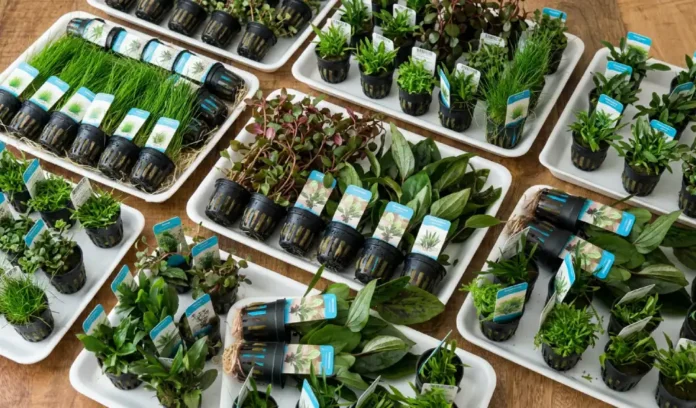
Adding new plants to the aquarium is one of my favourite parts of setting up or refreshing/replanting an aquarium. It’s nice to see them all in a package, fresh and green, and then think about where they will go. However, before I add any new plants to my fish tank, I like to give them some time on their own. Although this is an extra step, quarantining aquarium plants can prevent unwanted “hitchhikers” from entering an established aquarium.
Why quarantine aquarium plants?
Aquarium plants can include more than just roots and leaves. They might contain snails, snail eggs, algae, planaria, hydra, and other minute organisms that can be overlooked during inspection of a new shipment. Plant residues may also be from cultivation, handling, or prior treatments (before you received the plant). This is especially important when adding plants to an established aquarium with livestock, such as fish or shrimp.
Aquarium quarantine plants are much easier for me to handle than a large, permanent aquarium. It can be harder to eliminate unwanted organisms once they are already in the planted tank.
Inserting new aquarium plants into a quarantine tank
The first step I take when I bring plants home is to inspect them carefully as soon as I get them. I look at the undersides of leaves, around the stems, and primarily at the roots. If I find anything suspicious, I remove it before quarantining the plants. Then I rinse the plants lightly with clean / dechlorinated water to remove parts of the debris. I don’t want to be too abrasive since the leaves and stems can be easily harmed.
Then I place these plants in a different quarantine container. Not much extravagance is required. You can use an aquarium, plastic storage container, or other container; make sure it has never held soaps, detergents, or other chemicals. My setup is generally minimalist. Light, clean water and correct temperature for the plant is necessary. It is not necessary to set up a fully-equipped quarantine tank.
Allow the plants to rest alone prior to introducing them to the main aquarium. Another useful guideline is to also impose a two-week quarantine period; this will enable you to check carefully for potential signs you might have overlooked when buying the plants. At regular intervals I examine leaves, stems and roots and the sides and base of the container for the first 2 weeks. I also watch for the sudden increase in new material in the water. In a small container without rocks or plants, the small organisms are easier to see on the bare wall than behind rocks, substrate, and dense plants in a planted aquarium.
What hitchhikers should you look for?
One of the most apparent hitchhikers is the snail. A small snail may seem harmless, but if a few snail eggs come with the plant, the population can grow much larger. It is sometimes difficult to see snail eggs. Inspect leaves, stems, and /or surfaces for jelly-like masses of young, soft insect pests. You may also see algae, especially if the plants came from a different aquarium or growing facility. Other organisms such as hydra and planaria can sometimes join the group that’s part of a plant shipment, too. Not all organisms you see are harmful, so identification matters before deciding on treatment.
What if you find something?
If you discover an unwanted or “hitchhiker” has entered the quarantine area, the first step is to know what you are dealing with. Depending on the species and organism involved this could be action similar to hand pulling affected plant material or using a suitable plant dip. Alum dips, diluted hydrogen peroxide dips, and a properly formulated bleach dip, are the most often-used methods for dipping plants. These treatments can’t be easily substituted, however, and certain concentrations or durations could cause injury or kill aquarium plants. Before applying a treatment, always make sure it’s suitable for the plant.
Another blessing of discovering the issue during quarantine is that you have time to sort it out without putting your main aquarium at risk.
A little extra work now can save a lot later
When a new shipment of plants arrives, it’s a great thing but not something I’m fond of doing: quarantining new plants. A quarantine period allows for easy identification of any snails, eggs, algae, or other hitchhikers developing prior to their introduction into the main aquarium and before it can become an issue. Therefore, on receiving a new plant package, think before you act!
Design a mini-quarantine for those plants before you add them. Your future self and your aquarium may thank you.
